I bought my De’Longhi KG79 coffee grinder in Finland a long time ago. And would you believe it, the bloody thing still works.
Well, of course it does. I haven’t actually used it all that much, largely because I hate using it. That’s hardly a glowing endorsement of its longevity. Maybe the motor is exceptionally durable, maybe it isn’t, but I’m certainly not going to draw conclusions about build quality from the fact that a grinder I don’t particularly want to use still happens to work.
It’s not that the KG79 can’t grind coffee. It can. The problem is practically everything surrounding that basic function. The materials, the controls, the collection container and, above all, the cleaning. I’ve found an impressive number of ways for such a simple machine to be annoying.
Looks Smart, but the Plastic Is Rubbish
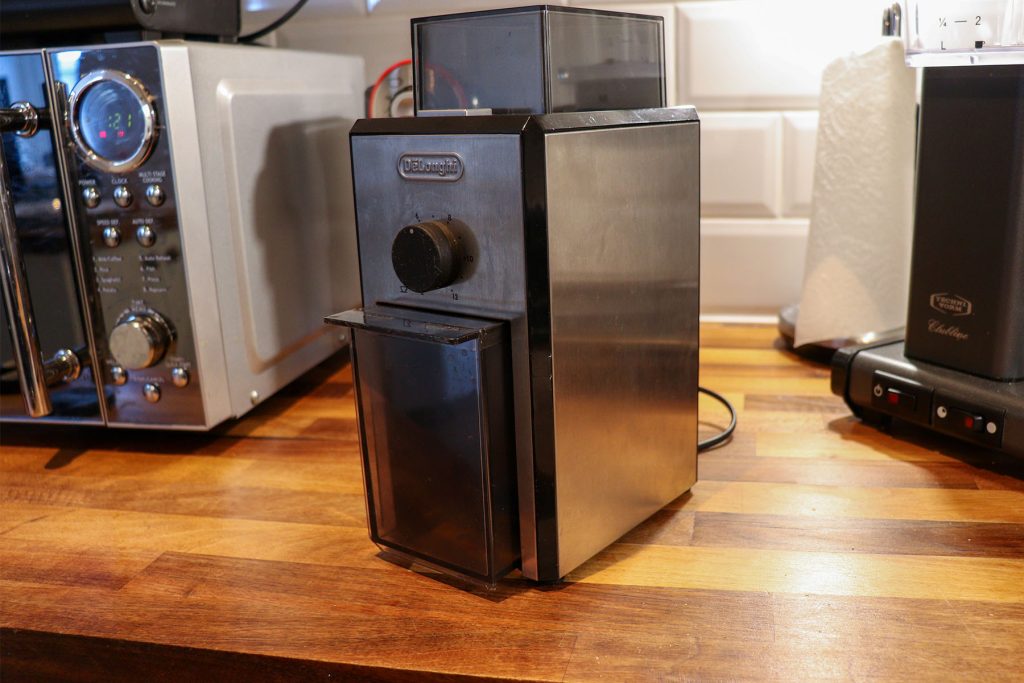
I’ll give the KG79 some credit for its appearance. Its squared-off design and metallic-looking finish can look quite smart, particularly if your kitchen has plenty of polished stainless-steel appliances. The shiny surfaces attract fingerprints, though, and the plastic ground coffee containers scratch ridiculously easily. So while it may look smart, the parts you handle regularly don’t stay that way for long.
There’s one detail I genuinely like: the smoked plastic bean hopper lid. Unlike a completely clear lid, it gives the beans at least some protection from light. That’s a sensible idea. Unfortunately, the ground coffee collection containers are another matter entirely.
The ground coffee collection containers started showing visible scratches after very little ordinary handling. We’re talking about the sort of taps, knocks, washing and drying that a removable part of a coffee grinder should be able to tolerate. Those scratches appeared years ago, and the plastic eventually cracked. I’ve had two of these containers break and shatter completely, and the one I have now is chipped.
These weren’t containers that survived years of abuse before finally giving up. In my experience, the plastic simply isn’t good enough for the everyday handling it’s supposed to withstand. That’s particularly disappointing for a part you need to empty and clean regularly.
Both Adjustment Dials Are Horrible
Both adjustment dials, the one for grind size and the one for the quantity of coffee, have a tacky, rubberised surface. They seem determined to collect every bit of dust and dirt in the kitchen. Even wiping them down is unpleasant because everything wants to stick to them. Why anyone thought this was a good material for coffee-grinder controls is beyond me.
The cup-quantity dial has a separate problem: the adjustment feels vague. It doesn’t have the positive, clearly defined clicks I’d expect, so returning confidently to exactly the same position is more difficult than it should be.
To be clear, the dials aren’t mechanically stuck. It’s the rubberised surface that’s sticky, while the cup adjustment itself feels imprecise. Two different annoyances, thoughtfully combined in the same place.
It Grinds Coffee. That’s Not the Problem.
The KG79 offers 16 grind settings, and the motor still does the basic job of grinding beans. I don’t have a major complaint about that part of the machine.
It’s fairly loud, too. I certainly wouldn’t choose to use it early in the morning while other people were asleep. But electric coffee grinders make noise, and I’m not going to pretend this one is uniquely terrible just because you can hear it working.
If I want to know exactly how much coffee I’m using, I weigh it rather than rely on that vague cup-quantity dial. Again, that isn’t the end of the world. The trouble with the KG79 is how these things keep adding up, and the worst of them comes when it’s time to clean it.
Cleaning It Is a Complete Pain
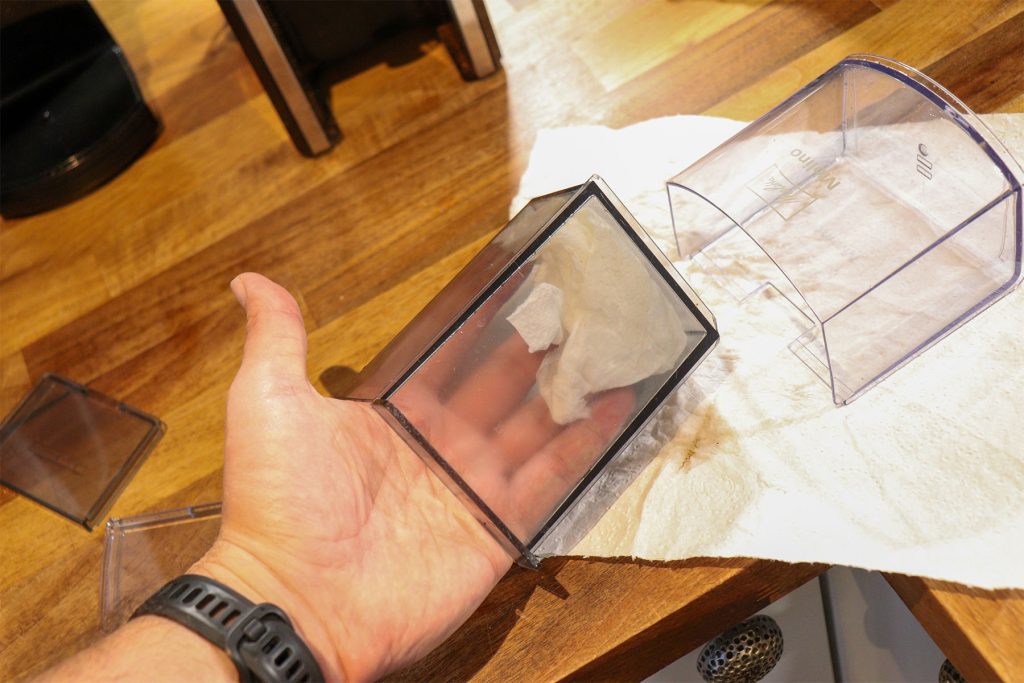
The ground coffee collection container is a tall, narrow, almost square plastic box. Fine coffee dust and static mean grounds cling to the inside, so getting everything out can involve tapping the container and still finding coffee stuck to the sides. Static isn’t unusual in grinders, but the container’s design doesn’t help.
Washing it is one thing. Drying it afterwards is where the absurdity really starts. The opening and the shape make it awkward to reach inside with a cloth, let alone into the corners. I think I have relatively ‘delicate’ hands and fingers, and I can’t even reach the bottom of the container to dry it without getting my hand stuck. It’s a simple plastic container, for crying out loud. I shouldn’t have to fight with the bloody thing just to get it clean and dry.
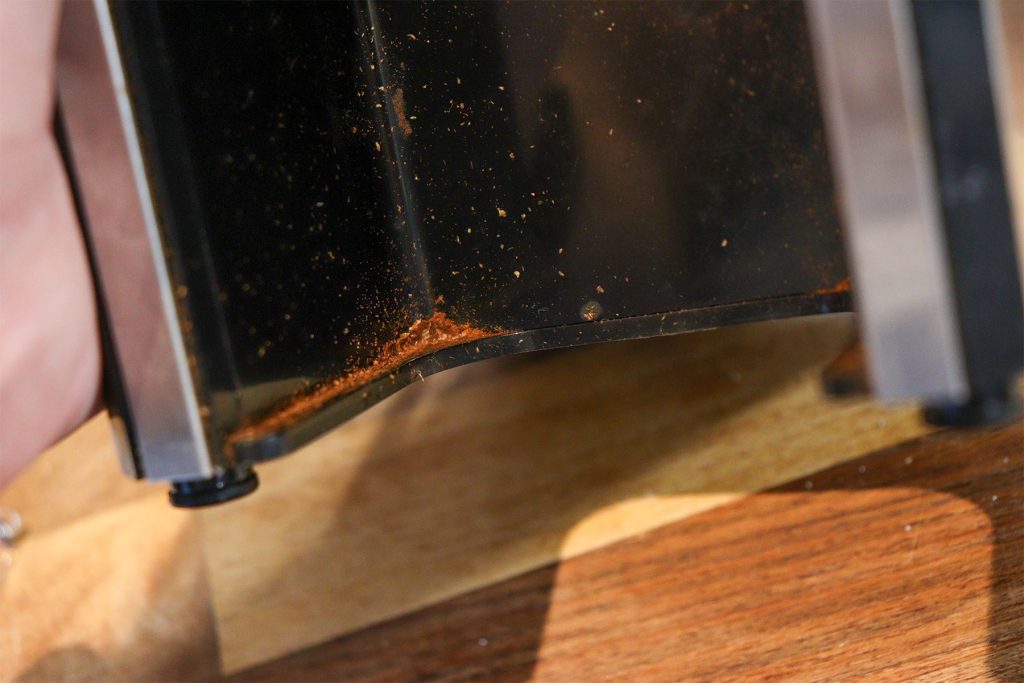
And the container isn’t even the worst part. The compartment where it sits has an awkward cavity where ground coffee accumulates. You can see the residue sitting there, yet getting into the space to remove it properly is unnecessarily difficult.
There’s also an opening underneath the machine that allows loose grounds to find their way onto the worktop. Cleaning can therefore involve lifting the grinder, tapping it and wiping up the mess underneath. So much for keeping the coffee inside the machine.
Add the easily scratched surfaces, the fingerprints and those horrible dust-attracting dials, and you have something that’s annoying to clean from practically every direction. I genuinely wonder whether anyone tried cleaning it before approving the design.
In fact, if the KG79 was deliberately designed to be consistently annoying to clean, I’d say someone did a spectacular job.
How It Compares With the Melitta Molino
Buying the Melitta Molino made the KG79’s design shortcomings even more obvious. I originally bought the Melitta as a reasonably priced grinder for the office, but ended up keeping it at home and moving the De’Longhi to the office instead.
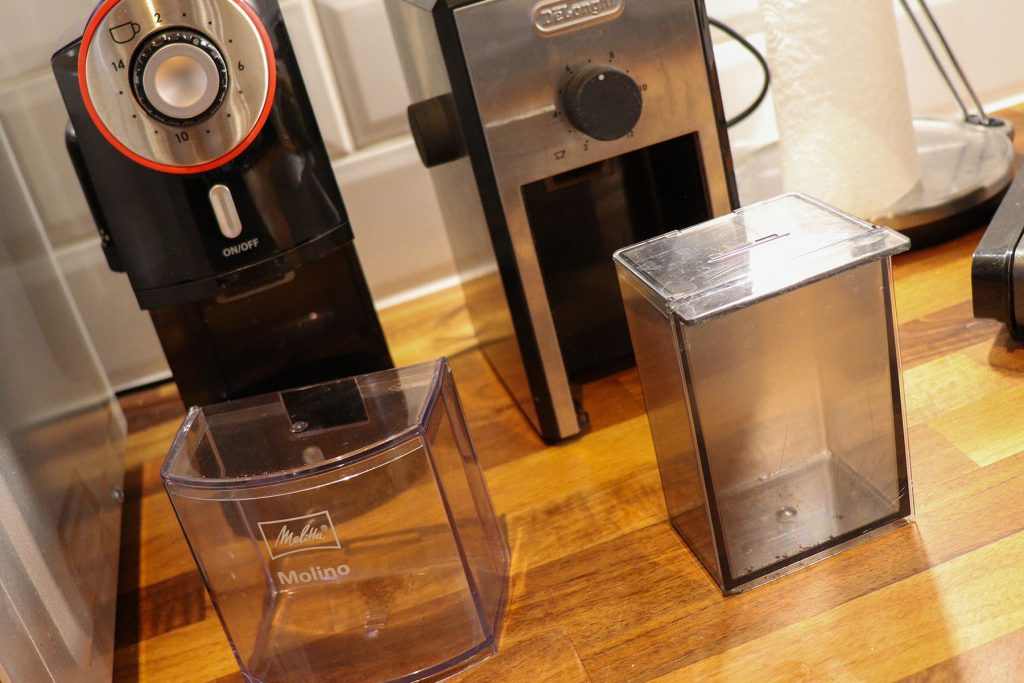
The most ridiculous difference is their size. The KG79 is actually slightly bigger than the Melitta and takes up more space on the counter, yet somehow manages to have smaller containers at both ends.
The De’Longhi’s bean hopper has an advertised capacity of 120 grams, compared with 200 grams for the Melitta. And I measured the internal volumes of their ground coffee collection containers by filling them with water: approximately 350 ml for the KG79, versus around 400–420 ml for the Melitta. Those figures describe container volume, not the weight of ground coffee each can hold.
So the physically bigger grinder holds fewer beans at the top and has less room for ground coffee at the bottom. Bigger machine, smaller capacity at both ends. To me, that’s simply stupid design.
But capacity isn’t even my biggest objection. The Melitta’s collection area has a straightforward, accessible round platform that I can simply wipe clean. Its container is much easier to wash and dry, and its controls have positive clicks without that horrible tacky coating. The Melitta has 17 grind settings rather than 16, but that extra setting isn’t why I prefer it. The whole experience of using and maintaining it is less annoying.
About the only detail I prefer on the KG79 is its smoked hopper lid, because it provides some protection from light. In contrast, the plastic ground coffee containers have been ridiculously easy to scratch and break.
The Molino has quirks of its own, and I’ve covered those in my separate review. But they’re minor things I can live with rather than reasons to actively dislike using it. I’ve even considered buying another Molino for the office despite already having a working KG79 there. Frankly, I wouldn’t be particularly upset if the KG79 got damaged at the office. That’s how little enthusiasm I have left for it.
Verdict: Would I Buy It Again?
Absolutely not. And I wouldn’t recommend it either.
Yes, the KG79 still works after more than a decade. But I’ve actually used it relatively little, in large part because I hate using it. So please don’t mistake that for me praising its build quality or claiming that it has proved exceptionally reliable. I simply can’t make that claim.
What I do have is years of experience with a grinder whose plastic ground coffee containers scratched and cracked with ordinary handling, whose two dials attract dirt like magnets, whose cup adjustment is frustratingly vague and whose collection container and internal cavity make cleaning far more awkward than it has any right to be.
It isn’t one dramatic failure. It’s a collection of bad design decisions that have made me genuinely dislike using the thing. It grinds coffee, but grinding coffee is the bare minimum I’d expect from a coffee grinder.
The Melitta Molino has shown me that I don’t have to put up with all that to get a reasonably priced electric grinder. If you’re considering buying the KG79, my advice is simple: I wouldn’t.
The KG79 works. That’s about the nicest thing I can say about it. After more than a decade of owning it, I’ve had quite enough of the bloody thing.