I bought the Melitta Molino because I wanted a decent, reasonably priced electric coffee grinder for the office. I’d already bought two Hario Mini Mill PLUS hand grinders, but eventually realised I couldn’t bear grinding coffee manually every day. I wanted something quicker, without spending a ridiculous amount of money on what should be a fairly straightforward job.
Melitta was already a familiar name to me, particularly because I have used its coffee filters with my Moccamaster for well over 20 years now. The Molino seemed like a sensible choice, offering 17 grind settings, an adjustable quantity dial and a 200-gram bean hopper, all without an excessive price tag.
And having used it, I think it’s a very sensible purchase. It’s straightforward, practical and does what I need without making the process of grinding coffee unnecessarily complicated.

Grind Settings and the Cup Dial
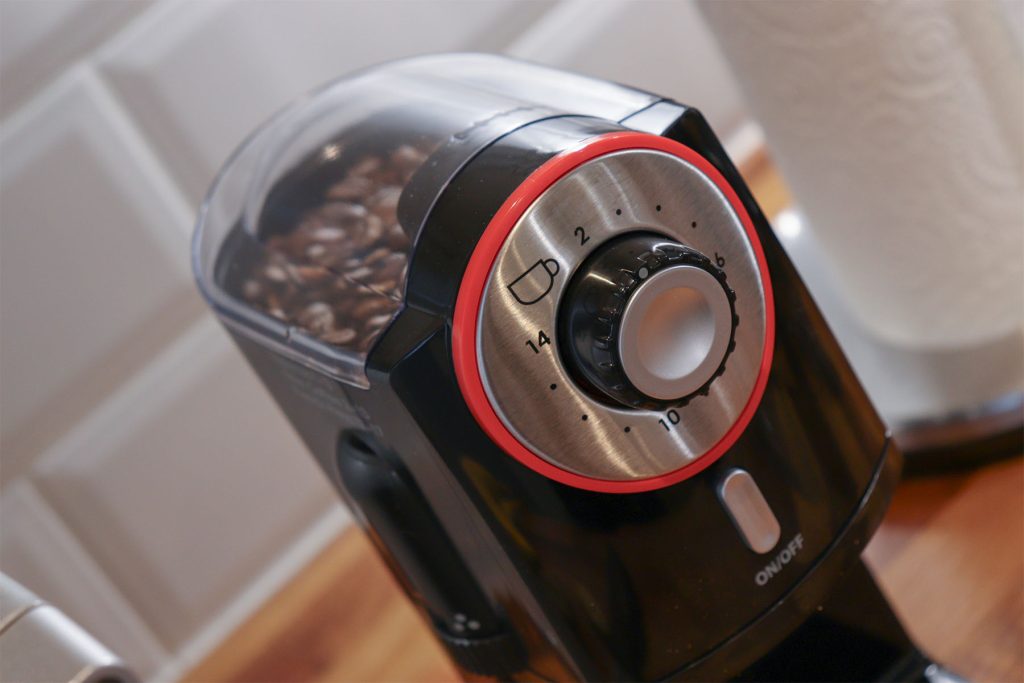
The Molino offers 17 grind settings, which gives me plenty of adjustment for the filter coffee I make. The burrs look sharp and well made, and the controls have positive, clearly defined clicks that make it easy to tell where you’ve set them.
The quantity adjustment is marked in cups, with additional little steps between the numbered settings. There are quite a few of them, making the process of finding the right dose feel a little like trying to crack a bank vault just to make a cup of coffee.
The cup markings themselves aren’t particularly helpful either. The minimum setting is labelled “2 cups”, but that produces approximately 9.5 grams of ground coffee in my measurements. That’s not even enough for one normal cup of coffee as I make it.
After some experimenting, I settled on three cups plus three clicks for the quantity, with the grind setting at 9. That gives me approximately 15.5–16 grams of ground coffee, which is exactly the sort of quantity I want for my usual V60 brew.
I’ve found the dosing reassuringly consistent, although the exact weight will naturally depend on the beans you’re using. I still use a coffee scale with a timer because I prefer measuring my coffee by weight rather than relying entirely on cup markings.
Once I’ve found the right settings, though, there’s very little to think about. Set the grinder, grind the coffee and get on with making it.
Does It Actually Make Good Coffee?
For my purposes, absolutely.
I mainly use the Molino with my Hario V60, along with the Hario Drip Kettle Air. Grind setting 9 works well for my usual brewing method.
With approximately 15–16 grams of coffee, a bloom of around 40 seconds and a total brewing time of roughly 2 minutes 30 seconds to 2 minutes 40 seconds, I get coffee that tastes full and strong without unpleasant bitterness or harshness.
That’s ultimately what matters to me. I’m not particularly interested in spending considerably more money on a grinder if the one I have already produces coffee that I genuinely enjoy drinking.
The Molino does the job perfectly well for the coffee I make.
Everyday Quirks
Let’s get one thing out of the way: the Molino isn’t quiet.
It’s a fairly loud electric coffee grinder, and I certainly wouldn’t use it early in the morning while other people were sleeping unless I wanted to wake them up. But that’s hardly unusual for this type of grinder. Grinding coffee beans with an electric motor makes noise, and the Molino is no exception.
The ground coffee collection container also has some static cling, which means a little ground coffee tends to stick to its sides rather than falling neatly out. Sometimes it needs a tap to get the remaining grounds moving. It’s worth mentioning, but I don’t find it particularly troublesome.
The container is easy to remove, and the area where it sits is straightforward to access and wipe clean. Some coffee grounds fall onto the platform when I remove the container after grinding, but the simple, open design makes them very easy to clean up. And again, this is expected with coffee grinders such as this one.
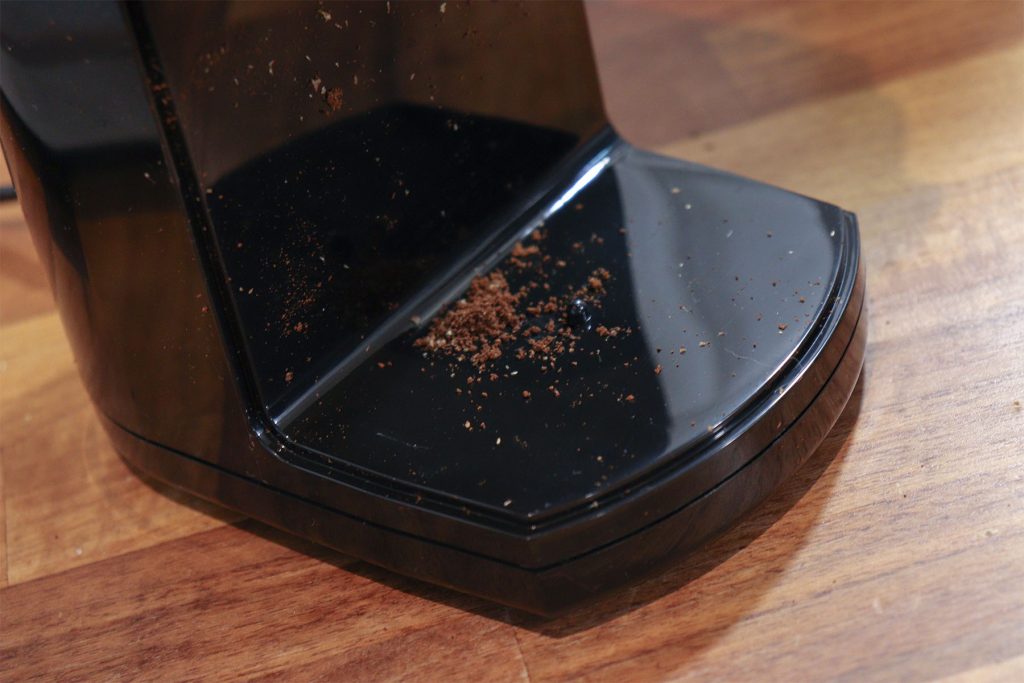
Melitta also includes a small cleaning brush, which is useful for getting into the grinder. Unfortunately, there’s no obvious place on the machine to store it. A little holder would have been a nice touch, but it’s hardly something I’d lose sleep over.
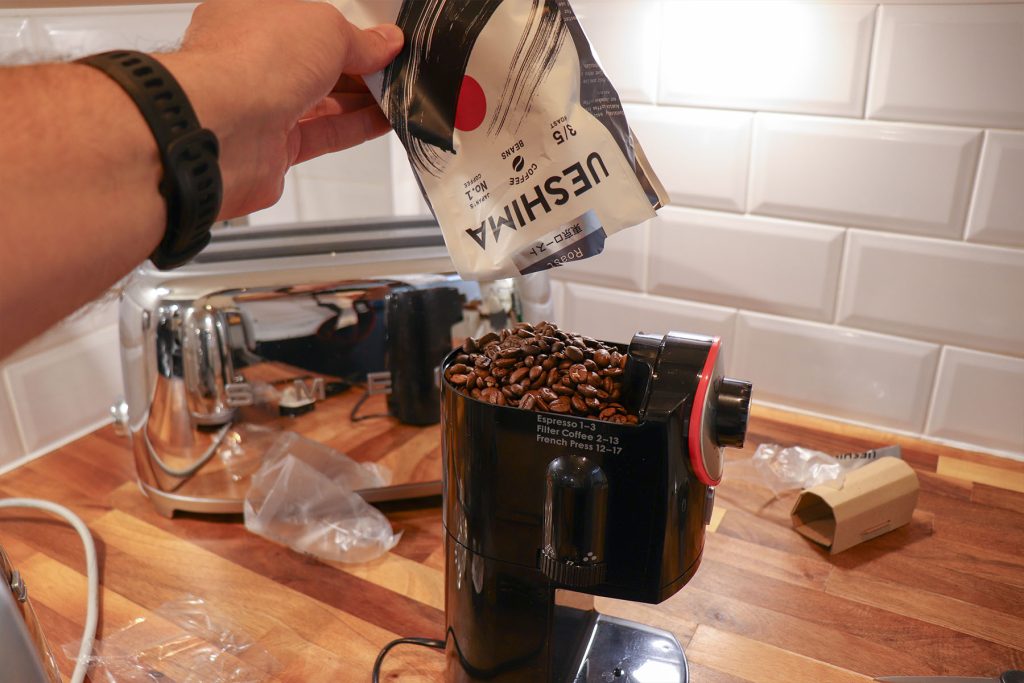
Then there’s the bean hopper. Melitta advertises a capacity of 200 grams, which I’d call a little generous. A standard 200-gram bag of coffee beans does fit, but you’ll need to pour it in carefully, particularly towards the end, unless you fancy spilling a few beans onto the counter.
It’s not a serious complaint, just something worth knowing if you normally buy coffee in 200-gram bags and want to empty the whole thing into the hopper.
Overall, these are small quirks rather than problems that significantly detract from using the grinder.
A Sensible Grinder at a Sensible Price
What I particularly appreciate about the Molino is that it doesn’t make a simple job unnecessarily complicated.
There are enough grind settings for my brewing needs, the quantity adjustment produces consistent results with the beans I use, and the coffee tastes good. The controls are straightforward, cleaning isn’t particularly difficult, and the few minor imperfections are easy enough to live with.
Of course, more expensive coffee grinders exist, and I’m sure some of them offer improvements. But for the coffee I make, I don’t see much point in spending two or three times as much money simply to achieve essentially the same result.
I wanted a practical, reasonably priced electric grinder, and that’s exactly what the Molino gives me.
Verdict: Would I Buy It Again?
Yes, absolutely. And I’d happily recommend it too, particularly to someone looking for a reasonably priced electric grinder for everyday filter coffee.
In fact, the original plan was to use the Molino at the office. However, I liked it enough to keep it at home and move my existing De’Longhi KG79 to the office instead.
I’ve even considered buying another Molino for the office, despite already having a working electric grinder there. I’ve explained why I prefer the Melitta in my separate KG79 review.
The Molino isn’t perfect, but none of its little quirks changes the fact that it does its job well. It grinds the coffee consistently enough for my needs, produces coffee I enjoy drinking and doesn’t require an unnecessarily large investment.
Sometimes that’s really all a product needs to do.